

The Roots of Wisconsin Fast Plants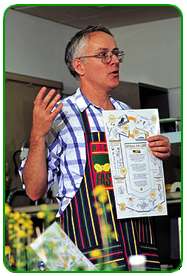 Rapid-cycling Brassica rapa, Fast Plants, was developed by Dr. Paul H. Williams, Professor of Plant Pathology at the University of
Wisconsin- Madison. Fast Plants are a product of Dr. Williams' research to improve the disease resistance of plants in the family Cruciferae, a large diverse group that includes mustards, radishes, cabbages, and other cole crops. In order to speed up the genetic research in the crucifers, he began breeding Brassica rapa and six related species from the family Cruciferea for shorter life cycles. The end result was a genetic line of small, prolific, rapid-cycling Brassicas. These plants, now known as "Fast Plants."
Rapid-cycling Brassica rapa, Fast Plants, was developed by Dr. Paul H. Williams, Professor of Plant Pathology at the University of
Wisconsin- Madison. Fast Plants are a product of Dr. Williams' research to improve the disease resistance of plants in the family Cruciferae, a large diverse group that includes mustards, radishes, cabbages, and other cole crops. In order to speed up the genetic research in the crucifers, he began breeding Brassica rapa and six related species from the family Cruciferea for shorter life cycles. The end result was a genetic line of small, prolific, rapid-cycling Brassicas. These plants, now known as "Fast Plants." Dr. Williams continued to refine the rapid-cycling Brassicas to have characteristics most suitable for laboratory and classroom use. He selected seed from stock that met the following criteria:
After about 20 years of planting, growing, and selecting, his breeding process had reduced a six-month life cycle to five weeks. Further breeding produced relative uniformity in flowering time, size, and growing conditions and yet the Fast Plants retained much variety. Over 150 genetically controlled traits have been recorded and can be useful in experiments.
For more information on Fast Plants and its relatives:
|
